She Wasn’t Chasing Thin. She Was Chasing Herself.
After years of treating the scale as the only verdict that mattered, a woman rebuilds around strength, energy and feeling at home in her body. The article explores how a sustainable comeback can begin when appearance stops being the entire goal.
Personal experiences are individual and aren’t medical advice. Talk to a qualified professional about your own health.
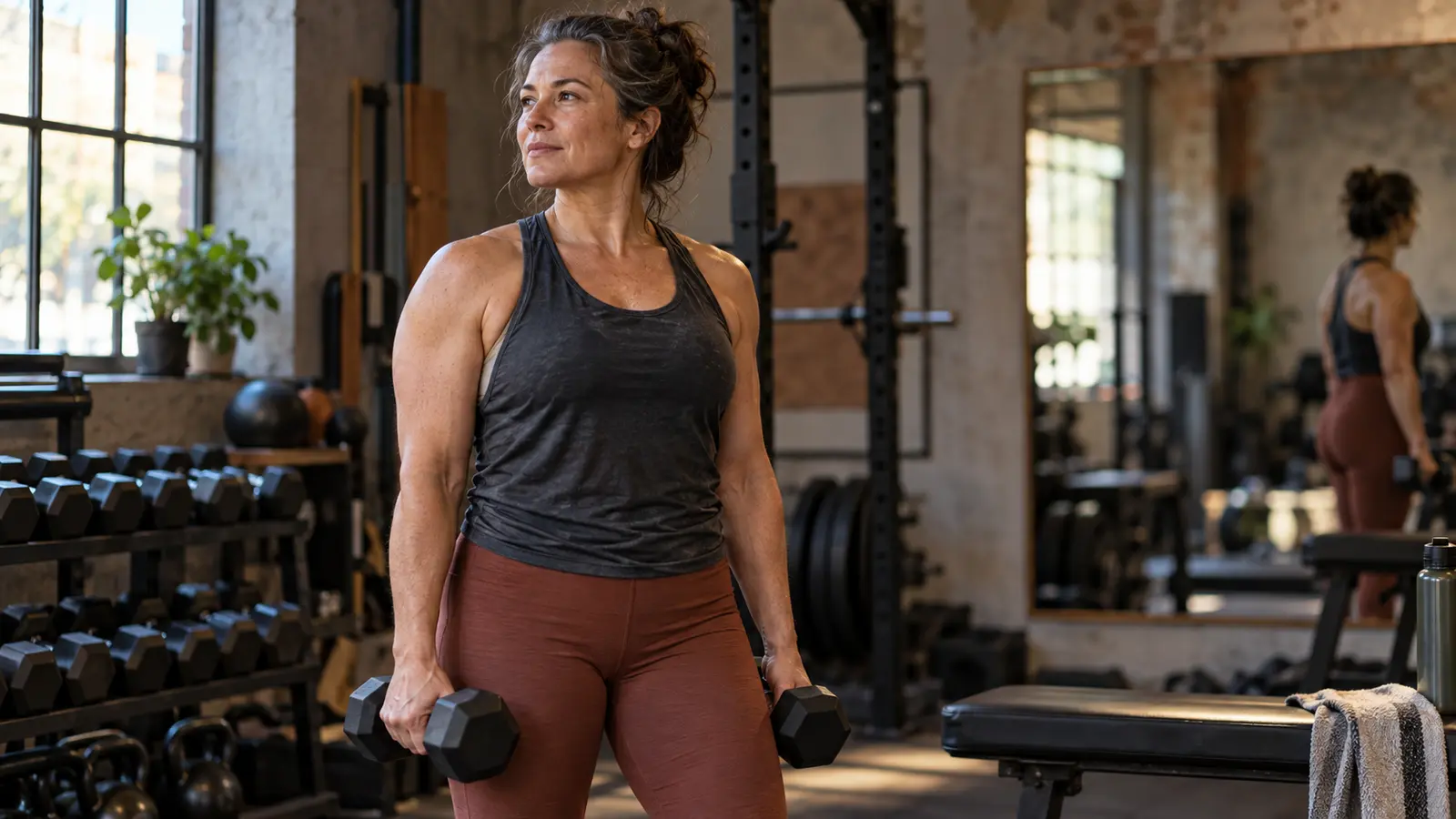
For years, every plan began with a number and ended with a verdict.
She wrote it on sticky notes, typed it into apps and carried it into fitting rooms like a private judge. When the scale moved down, she felt disciplined. When it moved up, she treated the change as a character flaw. The machine on the tile had become judge, jury and unreliable narrator.
She knew how to lose weight. She had done it several times. What she did not know was how to stop disappearing inside the pursuit.
The turning point came during a workout when she caught herself staring at another woman in the mirror. The other woman was younger, leaner and completely unaware that she had become evidence in somebody else’s trial.
“I realized I had spent years trying to become a shape,” she said. “I had never asked what I wanted my body to let me do.”
So she changed the question.
Instead of asking only, “How much do I weigh?” she began asking, “What can I carry? How do I feel at three in the afternoon? Do I trust my knees? Am I getting stronger? Am I hiding?”
This was not surrender. She still wanted to change her body. She still cared about her clothes and the mirror. The difference was that appearance stopped being the only witness allowed in the room.
Research on body functionality offers language for that shift. In randomized studies, women who practiced focusing on what their bodies could do reported improvements in body appreciation, functionality satisfaction and even appearance satisfaction. Strength training has also shown potential to improve adult body image, though the research is not equally strong across every population.
Her program became less dramatic and more complete. She lifted. She walked. She built meals that could survive a busy week. She protected sleep. When she missed a day, she returned instead of turning one imperfect choice into a lost month.
The scale changed, but it was not the first thing that changed.
First came the grocery bags she no longer divided into lighter trips. Then the dress she wore without spending the evening adjusting it. Then the photograph she saw and did not immediately enlarge, inspect and criticize.
She had believed confidence would arrive at a target weight, like a package waiting at a specific address. Instead, it arrived without tracking information—in fragments, while she was still becoming.
The goal was never to pretend appearance did not matter. The goal was to stop asking appearance to carry the entire meaning of her health.
She was not chasing thin.
She was chasing the woman who could enter a room without first trying to become smaller inside it.
And this time, when the woman in the mirror moved, she moved with her.
Sources (4)
- S11. SantaBarbara NJ, et al. “A Systematic Review of the Effects of Resistance Training on Body Image.”
- S18. Alleva JM, et al. “A randomised-controlled trial investigating potential underlying mechanisms of a functionality-based approach to improving women's body image.”
- S19. Alleva JM, et al. “Expand Your Horizon: A programme that improves body image and reduces self-objectification by training women to focus on body functionality.”
- S20. Gagne DA, et al. “Body dissatisfaction among middle-aged and older women: a review of the literature.”
Keep reading

What the Before-and-After Photo Leaves Out
Two images can show a visible result while hiding the fear, expense, setbacks, medical conversations and ordinary repetition between them. This article looks beyond transformation imagery to ask what the person actually did, what changed slowly and what the photographs cannot prove.
Lighter
The First Sign of Progress Wasn’t on the Scale
When weight changes slowly, better sleep, easier stairs or energy after dinner can reveal progress before the scale does. Broader measures can keep a realistic comeback alive without ignoring the original goal.
Lighter
The Plateau That Proved the Plan Was Real
When early progress stops, the stalled weeks feel like evidence that nothing works—but they may be the first test of whether a new life is actually being built. This story follows a person who learns to adjust, stay honest and continue without chasing a dramatic new promise.