The New Prime Does Not Look Like the Old One
Trying to recreate a younger body exactly can make every new beginning feel like a comparison already lost. This article offers a more useful target: a present-day prime built around capability, self-respect and the life the person wants now.
Personal experiences are individual and aren’t medical advice. Talk to a qualified professional about your own health.

He kept an old photograph in the bottom drawer of his desk, face down beneath expired warranties and forgotten cables.
In it, he was twenty-eight, shirtless beside a lake, lean without trying and unaware that his body would ever become a negotiation. For years, that picture was motivation. Then, quietly, it became evidence for the prosecution.
Every new attempt was measured against a man with fewer responsibilities, fewer injuries and no idea how fortunate he was.
The comparison was not fair, but fairness did not make it less powerful.
He believed success meant rebuilding the exact body in the photograph. Anything else felt like a smaller life.
Then his trainer asked a better question: “What do you want this body to be able to do now?”
The answer had nothing to do with the lake.
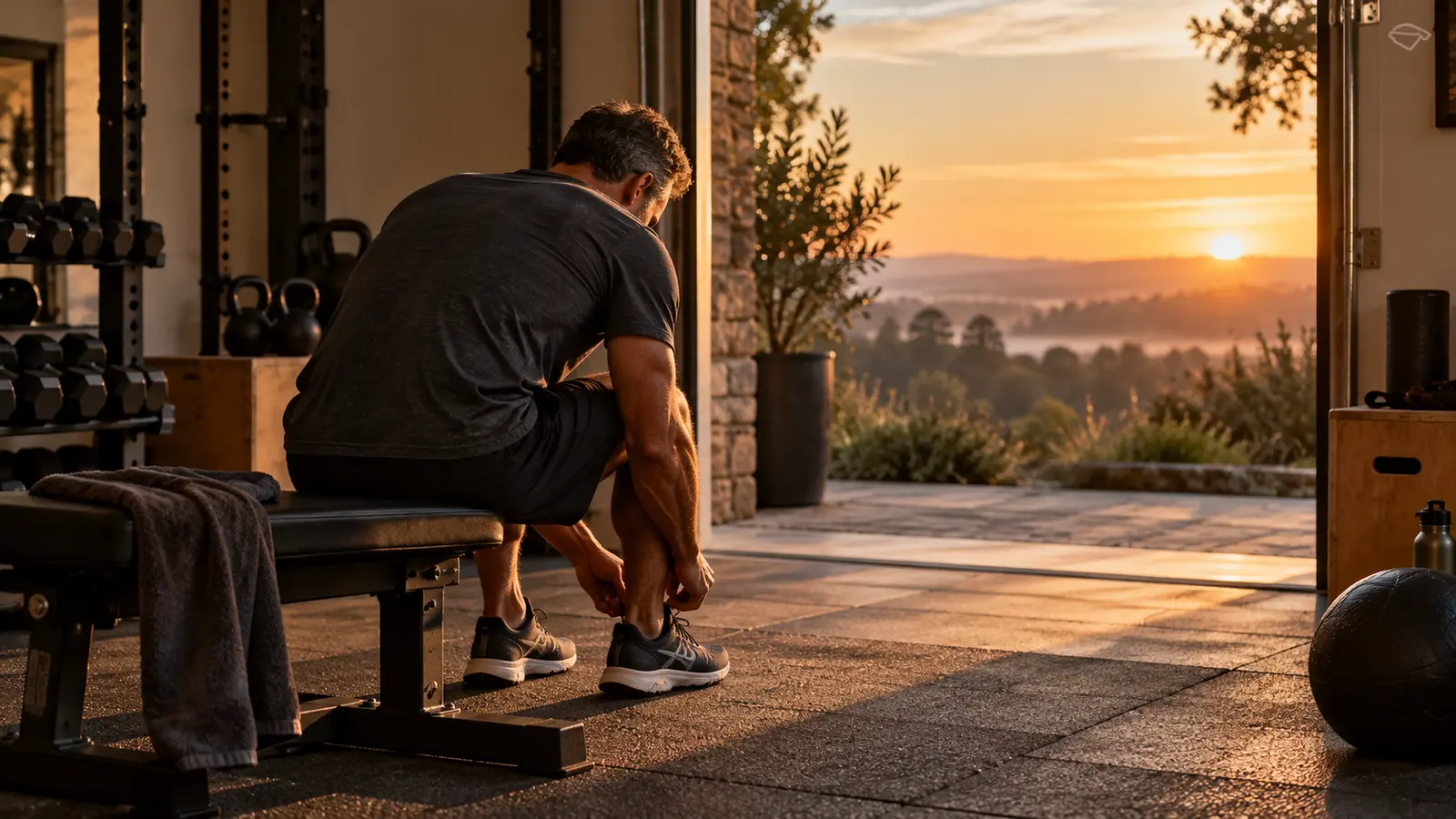
He wanted to travel without worrying about his back. He wanted strength that lasted through a workday. He wanted to play a full game without spending two days recovering. He wanted his health to support his family instead of becoming another family concern.
That became the blueprint for a new prime.
Research on healthy aging supports this functional definition. The target is not the absence of age. It is the capacity to do what matters. Strength remains trainable later in life, and functionality-focused approaches can improve the way people experience their bodies.
His program changed when the goal changed.
He stopped testing himself against workouts designed for his younger body and began training the qualities his current life required. He strengthened the areas that had become vulnerable. He improved conditioning gradually. He treated recovery as part of the plan instead of a sign of weakness.
The mirror changed too, but it was no longer the only judge.
One day, months into the process, he found the old photograph while looking for a document. He expected the familiar disappointment.
Instead, he felt affection for the young man in the picture—and no desire to trade places with him.
The man at the lake had youth.
The man holding the photograph had experience, discipline, people who depended on him and a body he had deliberately rebuilt.
The old prime happened to him, bright and largely unexamined.
The new one was chosen—repetition by repetition, with the photograph finally returned to the drawer face up.
Sources (5)
- S1. World Health Organization. “Healthy ageing and functional ability.”
- S10. National Institute on Aging. “How can strength training build healthier bodies as we age?”
- S15. Grgic J, et al. “Effects of Resistance Training on Muscle Size and Strength in Very Elderly Adults: A Systematic Review and Meta-Analysis.”
- S18. Alleva JM, et al. “A randomised-controlled trial investigating potential underlying mechanisms of a functionality-based approach to improving women's body image.”
- S19. Alleva JM, et al. “Expand Your Horizon: A programme that improves body image and reduces self-objectification by training women to focus on body functionality.”
Keep reading
Your Prime Was Never a Birthday
This article reframes a person’s prime as a state of capacity rather than an age they have already passed. It introduces the publication’s central promise: the next prime may look different from the first, but it can be stronger, wiser and built to last.
Second Wind
The Quiet Difference Between Feeling Younger and Feeling Capable
“Feeling younger” can become another impossible comparison with the past, while feeling capable is immediate and measurable in daily life. This article shows how strength, mobility, energy and presence create a richer definition of progress than trying to erase age.
The Comeback
One More Prime
A person stops treating decline as a settled identity and begins building a deliberate next chapter. The Comeback Protocol comes together through informed choices, consistent foundations, honest setbacks and the belief that older does not mean done.