The Version of You That Went Missing Slowly
Most people do not lose themselves in one dramatic moment; the change happens through skipped workouts, tired weekends, quiet compromises and plans repeatedly postponed. This story follows the small disappearances that finally lead to one clear decision: it is time to come back.
Personal experiences are individual and aren’t medical advice. Talk to a qualified professional about your own health.

No one could name the day it happened. That was part of the danger.
There was no dramatic collapse, no single photograph with a red circle around the moment everything changed. The running shoes simply migrated to the back of the closet. Friday night became recovery from the workweek. Sunday became preparation for the next one. Invitations were answered with “maybe,” then with silence.
The version of you that felt strong, curious and available did not disappear all at once. That person went missing by inches, so slowly that every smaller life still looked almost like the one before it.
One late meeting became a month of missed workouts. One injury became a reason to stop moving instead of a reason to change the way you moved. Sleep was borrowed from because morning responsibilities were nonnegotiable. Food became whatever could be eaten between calls, pickups and obligations.
None of this means you lacked character. It means environments shape behavior, and busy lives are excellent at making deterioration look reasonable.
Sleep loss matters here. It does not only make a person tired. It can erode attention, decision-making, emotional control and the ability to adapt. When those abilities are strained, the healthy choice is no longer just a healthy choice. It is one more decision demanded from a brain already carrying too many.
That is why the comeback rarely begins with a burst of inspiration. Inspiration is loud but temporary. The return usually starts with something almost offensively ordinary.
An appointment is kept.
A ten-minute walk is taken before the day can object.
A question that has been avoided is finally asked.
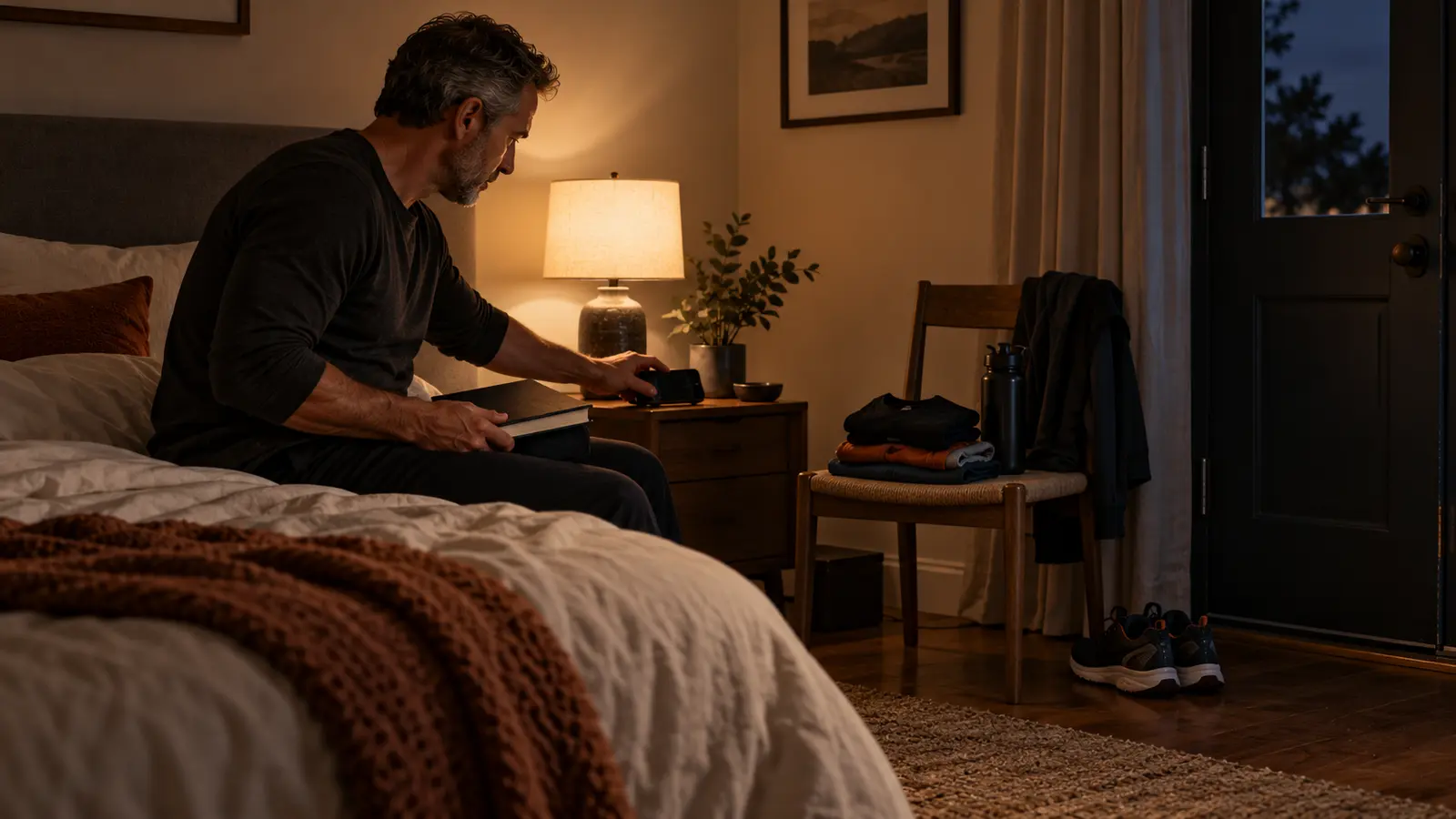
The phone goes on the other side of the room at night.
These actions can feel too small because they do not immediately change the mirror. But they change the relationship between intention and action. They create evidence that you can make a promise and still be there when it comes due.
Behavior research repeatedly points toward the same cluster of useful tools: specific goals, feedback, monitoring, support and plans that fit the person’s actual life. There is no universal trick. There is only the steady removal of friction between who you are and what you repeatedly do.
The version of you that went missing slowly usually returns the same way: not with a rescue party, but with breadcrumbs.
First, you notice that the afternoon does not feel as heavy. Then the stairs stop requiring a private negotiation. You sleep better. You begin planning weekends instead of merely surviving them. Someone asks what changed, and you realize the answer is not one thing.
You stopped waiting for a dramatic rescue.
You built a trail home—and then became the person willing to follow it.
Sources (5)
- S4. National Center for Health Statistics. “Aerobic Physical Activity Among Adults Age 18 and Older: United States, 2024.”
- S7. Centers for Disease Control and Prevention. “FastStats: Sleep in Adults.”
- S8. National Heart, Lung, and Blood Institute. “How Sleep Affects Your Health.”
- S16. Knittle K, et al. “Behavior Change Techniques Associated With Changes in Postintervention and Maintained Changes in Self-Efficacy for Physical Activity.”
- S17. Room J, et al. “Barriers and facilitators to exercise adherence in community-dwelling older adults.”
Keep reading
The Comeback Begins Before Anyone Can See It
The first meaningful changes are often invisible: keeping an appointment, going to bed on time, asking a difficult question and returning after a bad week. This article honors the private phase of change when there is no applause, no dramatic photograph and no proof except the decision to continue.
Second Wind
When “Busy” Becomes the Story You Hide Behind
A capable adult who always finds time for work and family begins to recognize that being busy has become both a real burden and a protective excuse. The article explores how to reclaim health without pretending responsibilities disappear or turning wellness into another full-time job.
Second Wind
A Better Body Was Never the Whole Goal
The visible transformation gets attention, but the lasting reward is more human: patience with family, confidence at work, energy for intimacy and plans made without calculating the physical cost. Health goals ultimately serve relationships and experiences.