She Wanted to Be Present in Her Own Photographs Again
A woman who has spent years stepping behind the camera confronts the quiet cost of making herself absent from family memories. Her comeback centers on confidence, health and the gradual freedom to be seen without waiting to become perfect.
Personal experiences are individual and aren’t medical advice. Talk to a qualified professional about your own health.

There were hundreds of family photographs from the previous five years and almost no evidence that she had attended. She had become the ghost behind the camera.
She was behind the camera at birthdays, behind the phone on vacations and just outside the frame at Sunday dinners. When someone turned the lens toward her, she found a task. Straighten the child’s shirt. Fix the table. Offer to take the picture so everyone else could be in it.
“I told myself I was the family photographer,” she said. “Really, I was erasing myself before anyone else had the chance to judge me.”
Body-image concerns in midlife are not adolescent problems that simply expire. Research connects body dissatisfaction with lower self-esteem, social withdrawal and reduced quality of life. Photo-based social comparison can intensify the sense that every image is a public evaluation.
She felt all of it.
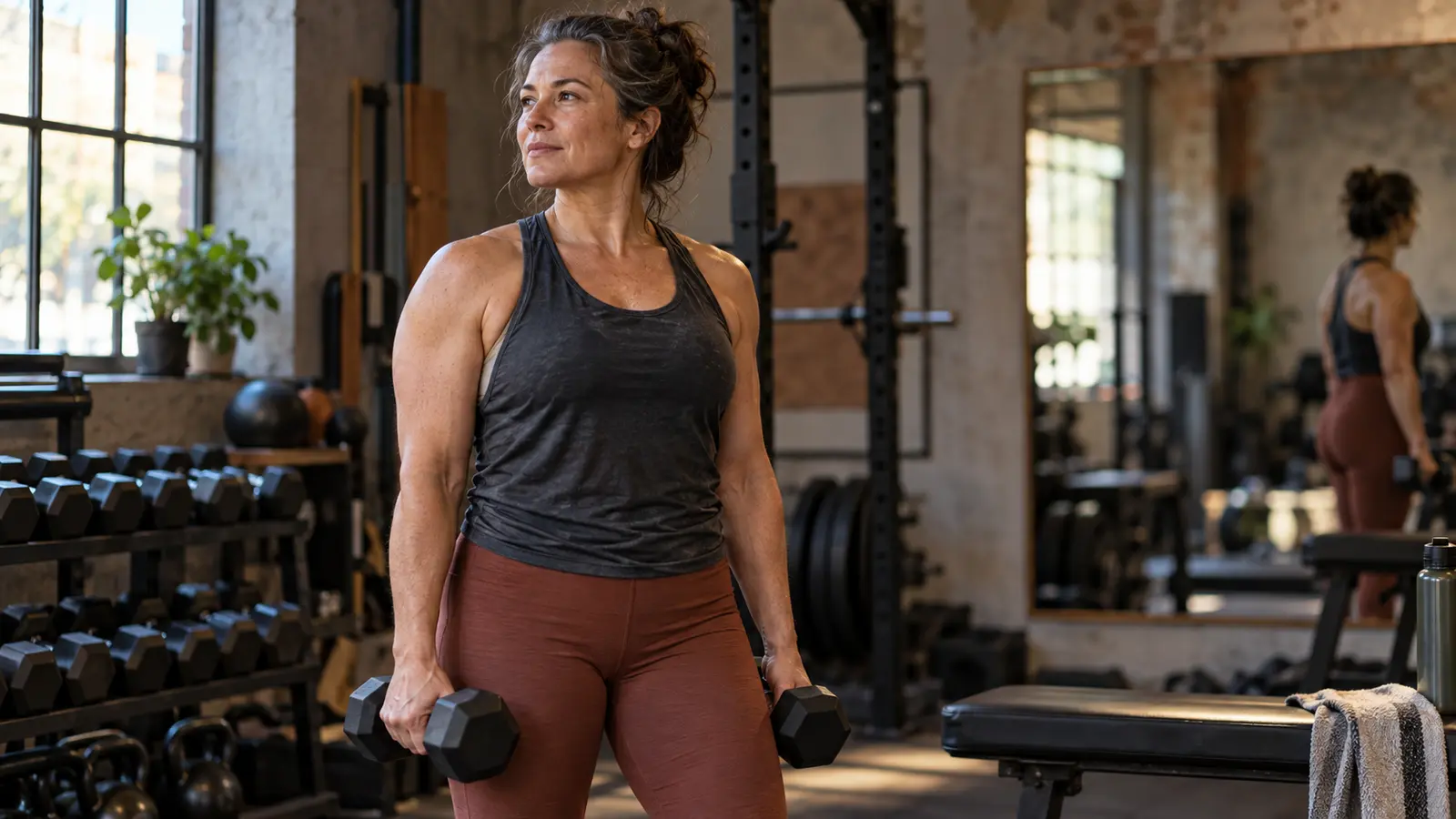
Her comeback included physical goals. She wanted to feel stronger. She wanted her clothes to fit differently. She wanted energy that lasted past dinner. She trained, changed how she ate and began protecting sleep instead of treating exhaustion as normal.
But she made one rule before her body changed:
She would stop leaving the frame. Not when she lost the weight. Not when she found the angle. Now.
At first, this felt more difficult than a workout. She saw every angle she disliked. She fought the urge to demand another picture or delete the evidence. Yet the people beside her were not studying the photograph the way she was. Her child saw a mother. Her partner saw a shared day. Her future family would see that she had been there.
Research on body functionality helped her put language around the shift. When people focus on what the body does—not only how it appears—body appreciation can improve. She began recording different evidence: the groceries she carried, the strength she gained, the distance she walked, the energy she brought home.
Months later, a photograph from a family party appeared in the group chat. She was laughing, one hand in the air, completely unprepared for the camera.
Her first instinct was to inspect her body.
Her second was to notice her face.
She looked alive.
That photograph became her favorite, not because she had reached a final weight or mastered a flattering pose. She loved it because nobody had needed to convince her to stand there.
She had spent years waiting to become worthy of the memory, while the memories kept forming without her.
The comeback taught her that presence could not wait—and that a life is not fully documented when its witness is always missing.
Sources (4)
- S18. Alleva JM, et al. “A randomised-controlled trial investigating potential underlying mechanisms of a functionality-based approach to improving women's body image.”
- S19. Alleva JM, et al. “Expand Your Horizon: A programme that improves body image and reduces self-objectification by training women to focus on body functionality.”
- S20. Gagne DA, et al. “Body dissatisfaction among middle-aged and older women: a review of the literature.”
- S27. Fox J, Vendemia MA. “Selective Self-Presentation and Social Comparison Through Photographs on Social Networking Sites.”
Keep reading
She Wasn’t Chasing Thin. She Was Chasing Herself.
After years of treating the scale as the only verdict that mattered, a woman rebuilds around strength, energy and feeling at home in her body. The article explores how a sustainable comeback can begin when appearance stops being the entire goal.
Lighter
What the Before-and-After Photo Leaves Out
Two images can show a visible result while hiding the fear, expense, setbacks, medical conversations and ordinary repetition between them. This article looks beyond transformation imagery to ask what the person actually did, what changed slowly and what the photographs cannot prove.
Second Wind
A Better Body Was Never the Whole Goal
The visible transformation gets attention, but the lasting reward is more human: patience with family, confidence at work, energy for intimacy and plans made without calculating the physical cost. Health goals ultimately serve relationships and experiences.